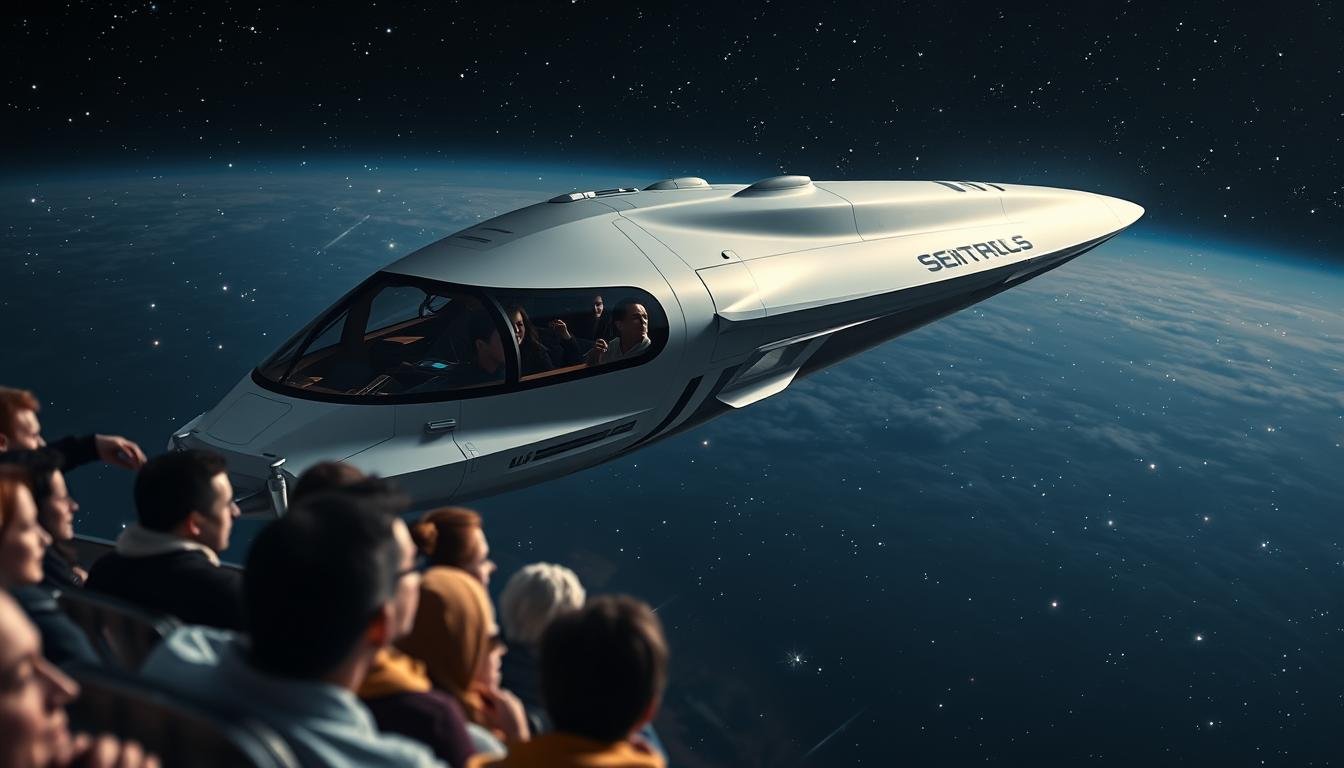
The idea of commercial space travel is no longer just a dream. It’s becoming a reality that excites people all over the world.
Companies like Virgin Galactic and Blue Origin are making space tourism a reality. This has made everyone even more excited about what’s to come.
The future of space tourism looks bright. New technologies and lots of investment are making it happen.
Key Takeaways
- The commercial space travel industry is gaining momentum.
- Private companies are leading the development of space tourism.
- Technological advancements are crucial for the future of space tourism.
- Investments in space tourism are on the rise.
- The future of space tourism looks promising.
The Current State of Space Tourism
Space tourism is no longer just a dream. Thanks to new tech and private money, it’s becoming real. This change is making space travel more open to everyone, starting a new chapter in space exploration.
Recent Milestones in Commercial Space Travel
Private companies have hit big marks in space travel. These achievements show how fast the field is growing.
Suborbital Tourism Flights
Flights like those by Virgin Galactic give a quick taste of space. They let people feel weightlessness and see Earth’s shape. These flights are the first step towards making space travel real.
Orbital Tourism Missions
Orbital missions, like those by SpaceX, offer a longer stay in space. These missions are a big step forward in space tourism.
Defining Space Tourism Categories
Space tourism has different types based on the experience. Knowing these categories helps us see the variety of options.
Suborbital vs. Orbital Experiences
The main difference is between suborbital and orbital experiences. Suborbital flights give a short taste of space. Orbital missions offer a deeper experience.
Space Stations and Beyond
Space stations are changing space tourism. They allow for longer stays and more experiences. The growth of these stations is key to a lasting space tourism industry.
| Category | Description | Examples |
|---|---|---|
| Suborbital | Brief experience of weightlessness and Earth’s curvature | Virgin Galactic |
| Orbital | Extended stay in space, several days | SpaceX |
| Space Stations | Extended stays, various experiences | Bigelow Aerospace, Axiom Space |
Major Players Shaping the Future of Space Tourism
The space tourism industry is on the verge of a big change. This change is led by both private and public sectors. It’s important to know who these major players are.
Private Companies Leading the Charge
Private companies are leading the space tourism industry. They are pushing technology and innovation forward. SpaceX, Blue Origin, and Virgin Galactic are at the forefront.
SpaceX and Its Tourism Initiatives
SpaceX is making big steps in space tourism with its Crew Dragon spacecraft. They have already sent several commercial crews to the International Space Station. SpaceX’s Starship program will also be key in future space tourism.
Blue Origin’s Vision for Space Tourism
Blue Origin is focused on suborbital flights with New Shepard. They aim to make space travel safe and accessible. Blue Origin’s goal is to make space travel available to more people.
Virgin Galactic’s Approach
Virgin Galactic is leading in suborbital space tourism with SpaceShipTwo. They are working to make spaceflight services commercial. Virgin Galactic’s focus is on safety and customer experience.
Government Space Agencies and Their Role
Government space agencies, like NASA, are also crucial. They work with private companies to grow the industry.
NASA’s Commercial Partnerships
NASA is partnering with private companies to boost space tourism. Programs like the Commercial Crew Program are key. NASA’s partnerships drive innovation and safety.
International Space Agencies’ Contributions
International space agencies are also helping. They work together on projects, sharing knowledge and resources. This global effort is vital for the industry’s growth.
| Company/Agency | Initiative | Focus Area |
|---|---|---|
| SpaceX | Starship Program | Reusable Spacecraft |
| Blue Origin | New Shepard | Suborbital Flights |
| Virgin Galactic | SpaceShipTwo | Suborbital Space Tourism |
| NASA | Commercial Crew Program | Commercial Partnerships |
“The future of space tourism is not just about the technology; it’s about making space accessible to everyone.”
As the industry grows, working together will be key. The future of space tourism looks bright, thanks to innovation and accessibility from key players.
Technological Hurdles to Overcome
Space tourism’s growth depends on solving big tech problems. One major hurdle is making spacecraft safe and efficient for civilians.
Spacecraft Development Challenges
Creating a spacecraft for civilians is a tough job. It needs big steps in many areas.
Reusability and Cost Efficiency
Reusability is key to making space travel cheaper. Companies like SpaceX are leading the way with reusable rockets.
Life Support Systems for Civilians
Another big challenge is making life support systems for long space stays. These systems must provide air, water, food, and protect against radiation.
Safety Systems and Reliability Concerns
Safety is the top priority in space tourism. It’s crucial to make spacecraft and systems reliable for tourists’ safety.
Launch and Re-entry Risks
The launch and re-entry phases are the riskiest parts of space travel. We need to develop safety measures and technologies to reduce these risks.
Health Considerations for Space Tourists
Space travel comes with health risks like radiation, microgravity effects, and isolation. It’s important to understand and lessen these risks for tourists’ health.
In summary, solving tech challenges in spacecraft, safety, and life support is key for space tourism’s growth.
Space Tourism: When Will It Happen?
Space tourism is getting closer, and everyone wants to know when it will start. The future of space travel is moving fast. Thanks to new tech and investments in private space companies, space tourism is becoming a real option.
Short-Term Projections (2023-2030)
First, we’re focusing on suborbital tourism. Companies like Virgin Galactic and Blue Origin are leading this effort.
Suborbital Tourism Timeline
Soon, we’ll see suborbital flights. Virgin Galactic hopes to start flying people in 2023. Blue Origin is also making great strides, with successful test flights.
Orbital Tourism Expectations
Orbital tourism will come next. SpaceX is at the forefront, thanks to reusable rockets. This tech makes space travel cheaper and more accessible.
Long-Term Outlook (2030-2050)
Looking further ahead, lunar tourism and more are looking promising. NASA’s Artemis program plans to send humans back to the Moon by 2025.
Lunar Tourism Possibilities
Lunar tourism might start in the 2030s. Private companies and space agencies are teaming up to make the Moon a destination.
Space Hotels and Extended Stays
Space hotels are also on the horizon. Bigelow Aerospace is working on inflatable space habitats. These could offer long stays in space, marking a new chapter in space tourism.
Regulatory and Legal Framework
Space tourism is growing fast, leading to new rules and laws. Companies like Virgin Galactic and Blue Origin are leading the way. Governments and regulatory groups are creating guidelines for safety and compliance.
Current Space Tourism Regulations
The rules for space tourism are changing quickly. In the U.S., the Federal Aviation Administration (FAA) oversees commercial space activities.
FAA and International Oversight
The FAA sets important guidelines for space tourism. They focus on launch and re-entry safety, as well as passenger and crew safety. The United Nations Committee on the Peaceful Uses of Outer Space (COPUOS) works on a global framework for space activities.
Passenger Requirements and Training
Space tourists must go through specific training. They learn about emergency procedures, high-g forces, and weightlessness.
Evolving Legal Landscape
The legal side of space tourism is complex and changing. Issues like liability, insurance, and international law are being sorted out as the industry grows.
Liability and Insurance Challenges
Figuring out who is liable in case of an accident is a big challenge. Insurance policies are being made to cover these risks, but the legal system is still developing.
International Space Law Considerations
International space law, like the Outer Space Treaty, is key. It deals with jurisdiction, ownership, and space use.
As space tourism moves forward, the rules and laws will need to keep up. They must address new challenges to ensure the industry’s growth.
Conclusion
Space tourism is changing fast, thanks to Virgin Galactic, Blue Origin, and SpaceX. They are overcoming big challenges to grow the industry. This growth is exciting for the future.
More people will travel to space soon. This is because safety and reliability are getting better. We’ll see more space trips becoming common and easy to get to.
Space travel could change how we see and experience space. With new ideas and money, the future looks bright. We’re in for big changes in space tourism and travel.
FAQ
What is space tourism?
Space tourism is about traveling to space for fun. It includes short flights and staying at space hotels.
Which companies are leading the space tourism industry?
SpaceX, Blue Origin, and Virgin Galactic are leading. They’re making new spacecraft for space travel.
What are the main technological challenges facing space tourism?
The big challenges are making spacecraft reusable and affordable. Also, creating safe life support systems and ensuring safety during flights.
When can we expect space tourism to become more accessible?
Suborbital flights might start in 2023. But, orbital flights and complex missions will take longer. They could become common between 2030 and 2050.
What regulatory frameworks govern space tourism?
The FAA in the U.S. and international bodies set rules. These rules are changing to meet the needs of space tourism.
What kind of training do space tourists need?
Space tourists need training for space travel. They learn about safety and emergency procedures.
Are there any health considerations for space tourists?
Yes, space travel affects health. It includes space sickness, radiation, and weightlessness effects.
How will liability and insurance be handled in space tourism?
Liability and insurance are big issues. There are talks about managing risks and covering passengers and operators.